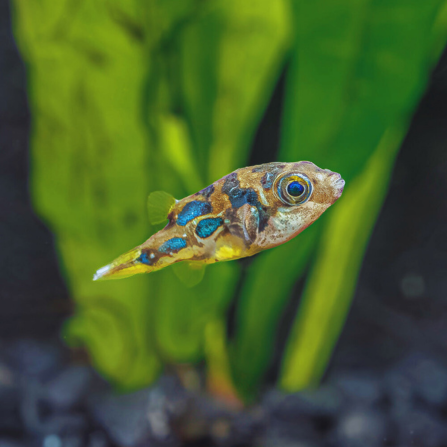
🧬 Origins and Classification
Scientific Name: Carinotetraodon travancoricus
Family: Tetraodontidae
The Pea Puffer, also known as the Dwarf Pufferfish, is a tiny freshwater species native to India’s rivers and streams. Although it is one of the smallest pufferfish in the world, the Pea Puffer is full of personality and intelligence. Because of its unique behavior and expressive face, this fish has become increasingly popular among aquarists who enjoy nano aquariums.
🌍 Background and Popularity
Pea Puffers are admired for their curious, interactive behavior. Additionally, they are known to recognize their keepers and often follow movement outside the tank. Their compact size and bold attitude make the Pea Puffer a fascinating choice for dedicated hobbyists.
🎨 Appearance
Color:
- Olive-green body
- Dark spots or blotches along the back and sides
- Bright yellow belly with a shimmering shine
Structure:
- Rounded, compact body
- Large, expressive eyes
- Fast, precise swimming style
📏 Size and Lifespan
- Size: Very small — around 1 inch
- Lifespan: Typically 4–5 years with proper care
🏡 Tank Requirements
Tank Size:
Minimum 5 gallons for a single Pea Puffer.
A group of three requires at least 10 gallons.
Water Parameters:
- Temperature: 74–82°F
- pH: 6.5–7.5
- Soft to moderately hard water
🪴 Ideal Habitat Setup
Pea Puffers thrive in heavily planted tanks. Therefore, include dense plants such as Java Moss, Anubias, or floating plants to create natural hiding spots. Additionally, caves and driftwood help mimic their wild environment and reduce stress.
🍽️ Diet
Type: Carnivorous
Foods:
- Frozen or live foods: bloodworms, brine shrimp, daphnia
- Snails (ramshorn or bladder snails) for hunting and beak maintenance
- Micro worms or mosquito larvae
🍴 Feeding Tips
Feed small amounts once or twice daily.
Because they refuse dry food, provide fresh or frozen options regularly.
🤝 Behavior and Compatibility
Temperament:
Curious, bold, and territorial.
Tank Mates:
Pea Puffers are not ideal for community tanks.
They may nip fins or chase other fish. Therefore, they do best in:
- Species-only tanks
- Or with fast, non-finny clean-up snails (not fish)
👥 Grouping
If keeping multiple, maintain a ratio of 1 male to 2–3 females.
Also, provide plenty of plants to prevent territorial fights.
💡 Care Notes
A Pea Puffer needs clean water and a stable environment. Weekly 30% water changes help prevent ammonia buildup, which puffers are sensitive to. Additionally, offering live snails regularly helps keep their beaks naturally trimmed.
With proper care, the Pea Puffer becomes an engaging, interactive pet that brings personality and excitement to any nano aquarium.